How to prepare your home
How to get your home ready for power cuts, storms and the unexpected. No panic. No doomsday prophecies. Just concrete steps, based on recommendations from the Norwegian civil-protection authority DSB.
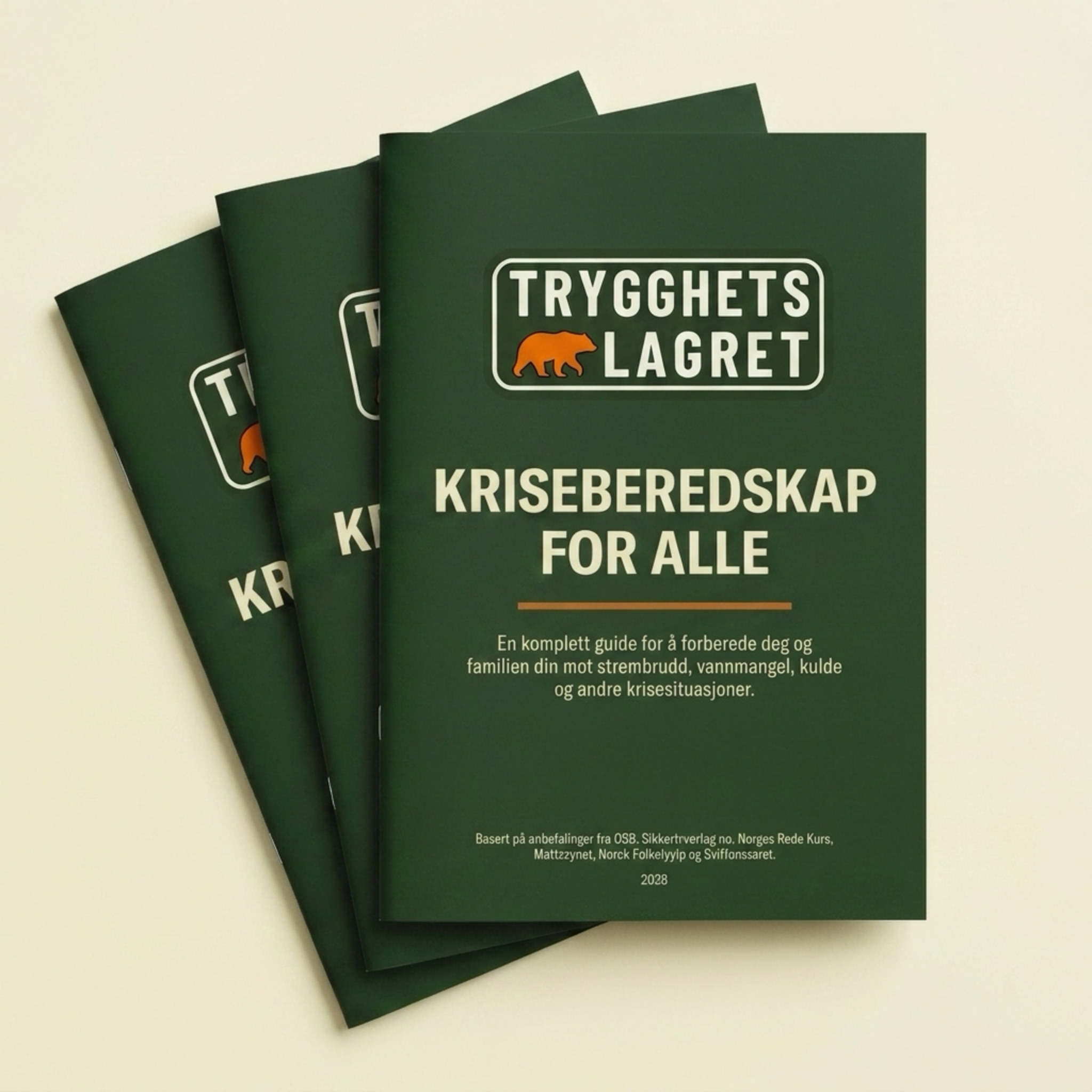
Emergency preparedness for everyone
Our complete 22-page preparedness guide — based on recommendations from DSB, Sikkerhverdag.no, the Red Cross, the Norwegian Food Safety Authority, Norwegian People's Aid and the Civil Defence.
Included automatically with every order over 500 kr. Sent by email as a PDF.
How to get started — 7 simple steps
Preparedness doesn't have to be a big project. Having a little is better than having nothing. Start with one step at a time.
Week 1 — Water
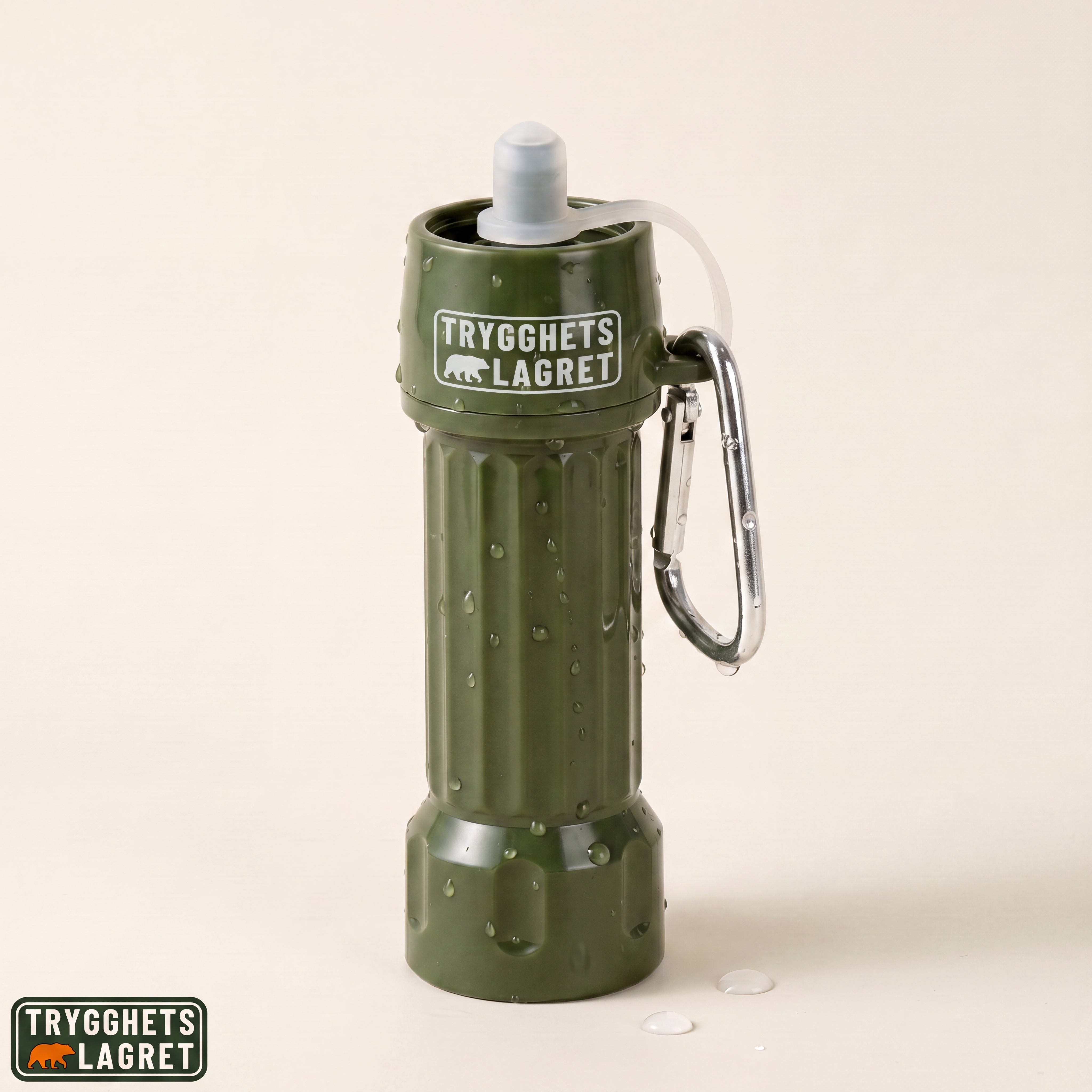
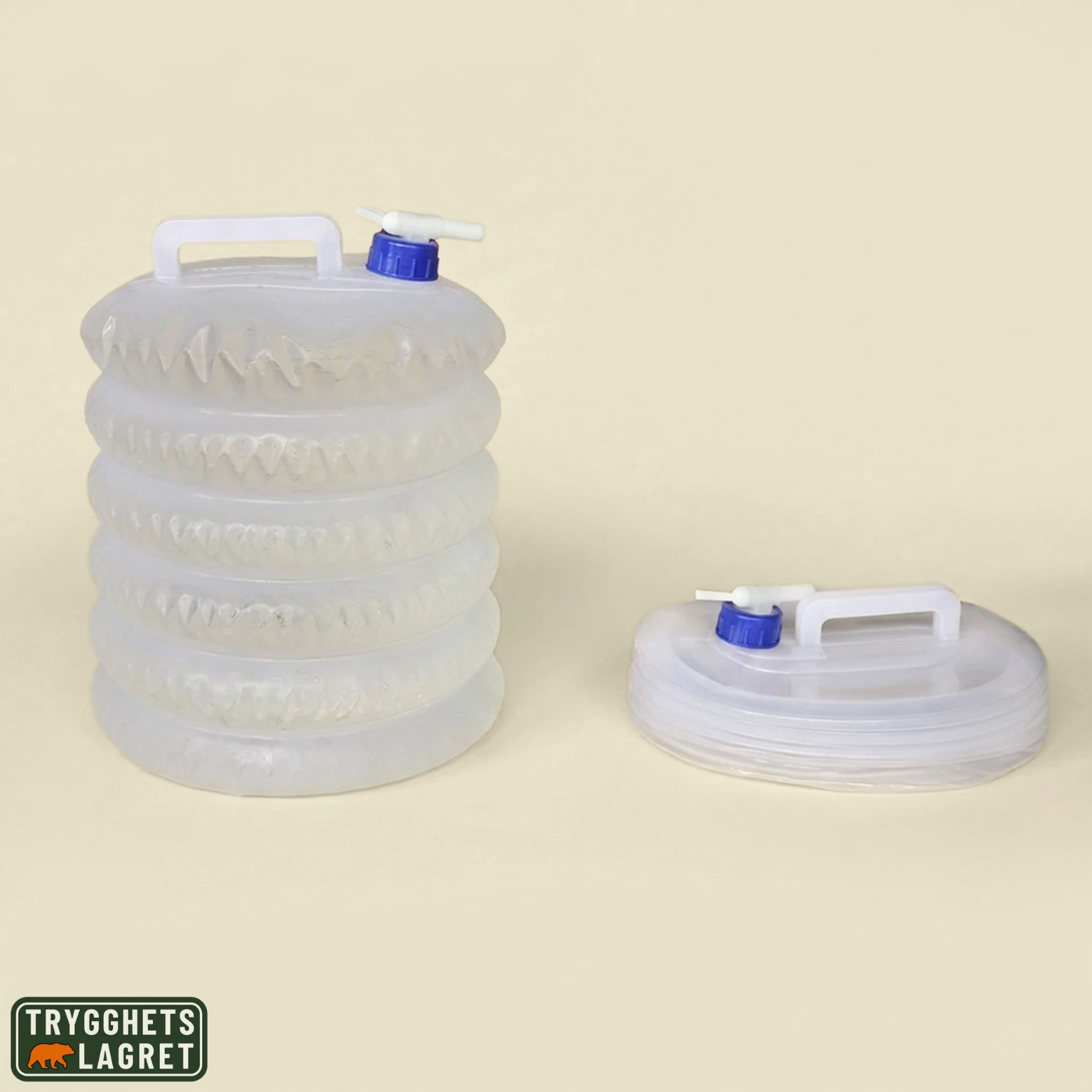
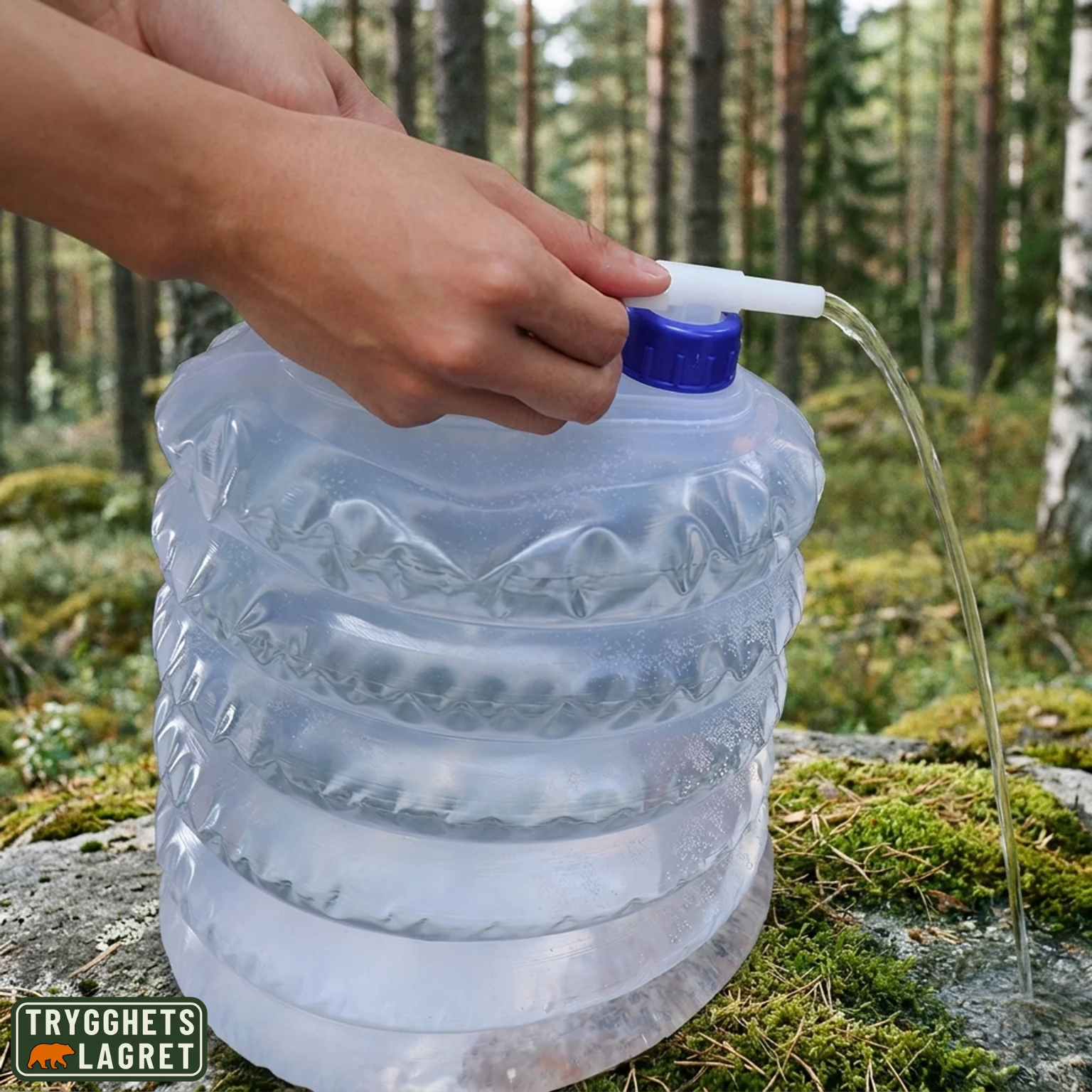
Fill a 10-litre container with tap water. Mark it with the date. Put it in a dark cupboard.
DSB recommends 20 litres per person for one week.
Week 2 — Food
Fill a box with food for 7 days. Tinned food, pasta, rice, nuts, chocolate. Things that don't need refrigeration.
Week 3 — Radio
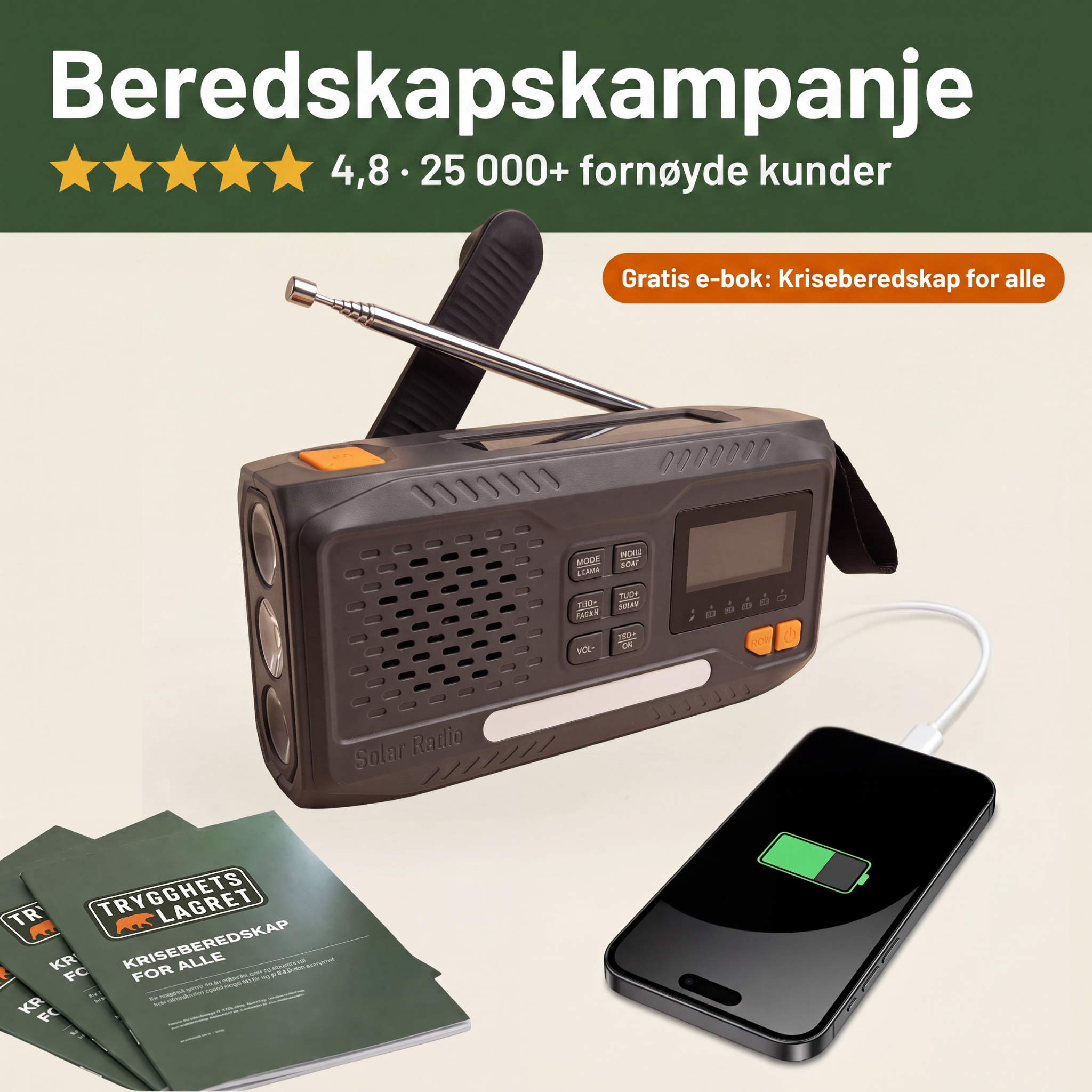
Get a DAB radio with solar panel and hand crank. Test it. Find your local emergency station.
Norway no longer has FM — DAB+ is essential.
See the emergency radio →
Week 4 — Light
A head torch per family member and a big bag of tealights. Keep torches in fixed places.
Week 5 — Health
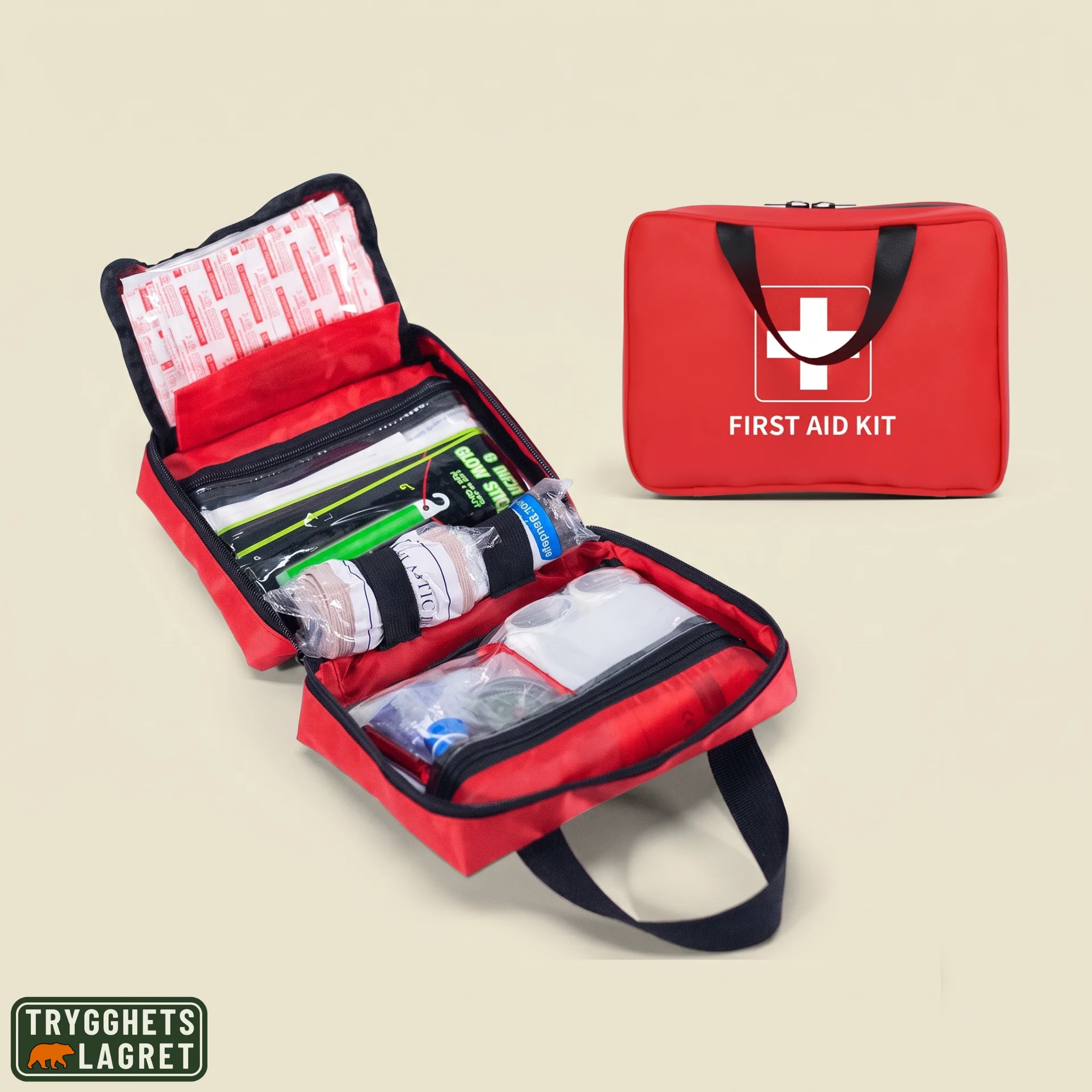
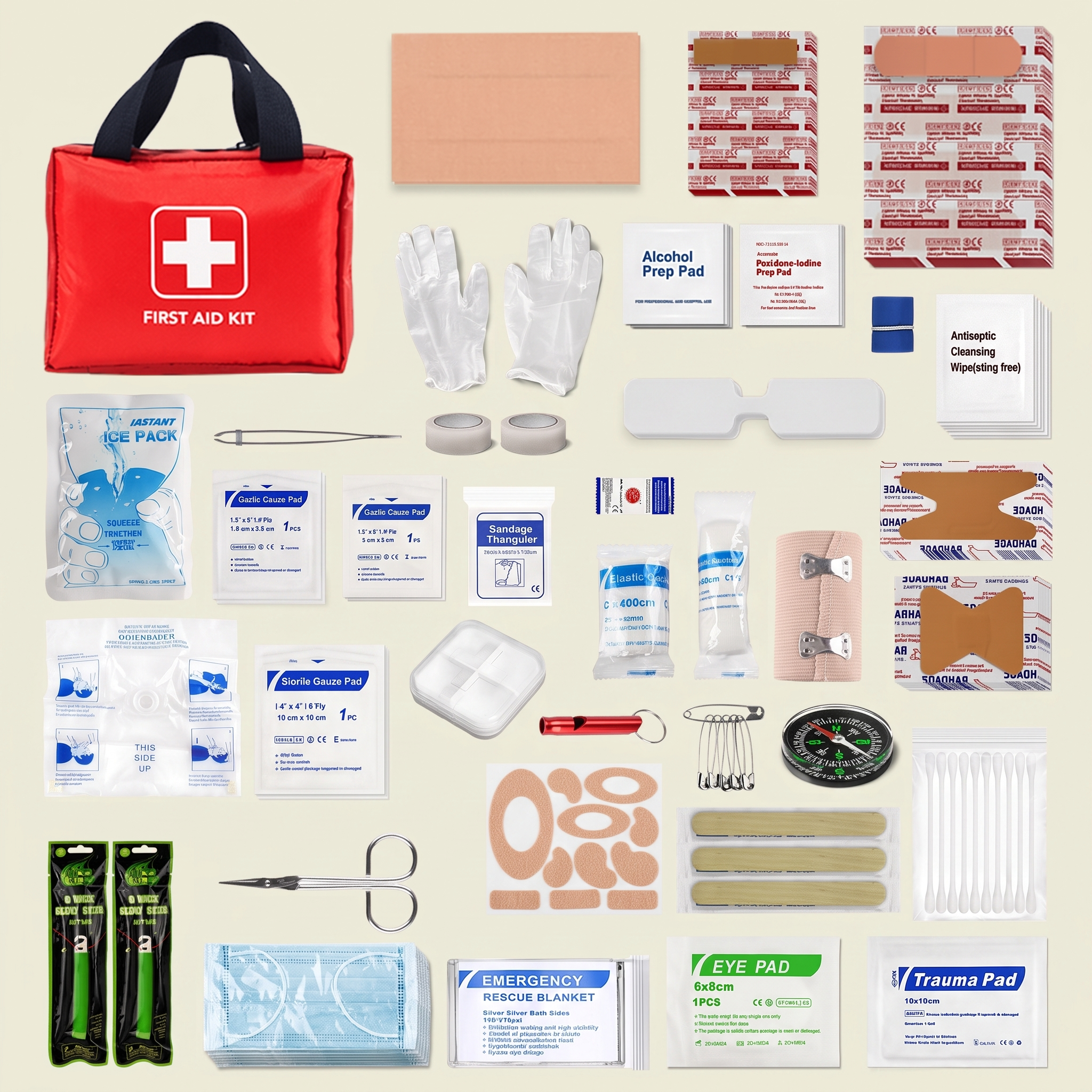
Top up the first aid kit. Check that prescription medicines will last at least a month.
Week 6 — Practical
Withdraw cash for one week's shopping. Gather important documents in a waterproof folder.
Week 7 — People
Get to know a neighbour. Talk about preparedness. Look up your nearest shelter.
Three things to know first
1. DAB is not optional in Norway
The FM network was switched off in 2017. Every modern radio in Norway must be a DAB radio. Check that yours supports DAB+, not just DAB.
2. 20 litres of water per person
That's DSB's recommendation for one week. For a family of four that's 80 litres. Start with 40 — enough for the most critical three days.
3. Mobile networks fail after a few hours
When the base stations' batteries run out during a power cut, a DAB radio becomes your only link to information. NRK P1 is Norway's official emergency channel.
The full preparedness guide — free with orders over 500 kr
22 pages of concrete advice, checklists and source references. Written for Nordic conditions. Includes:
- Water — your most important resource
- Food — your emergency store in the cupboard
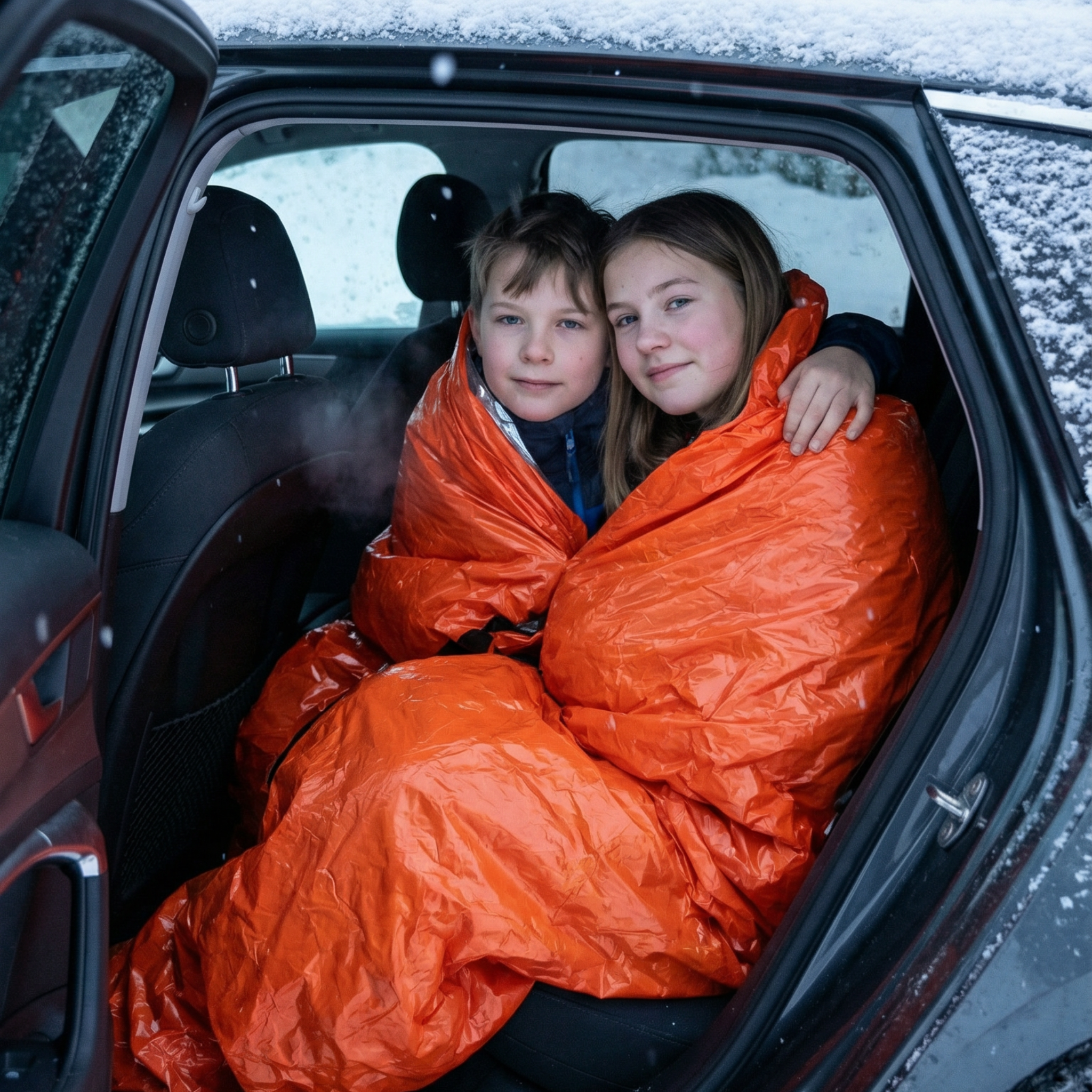
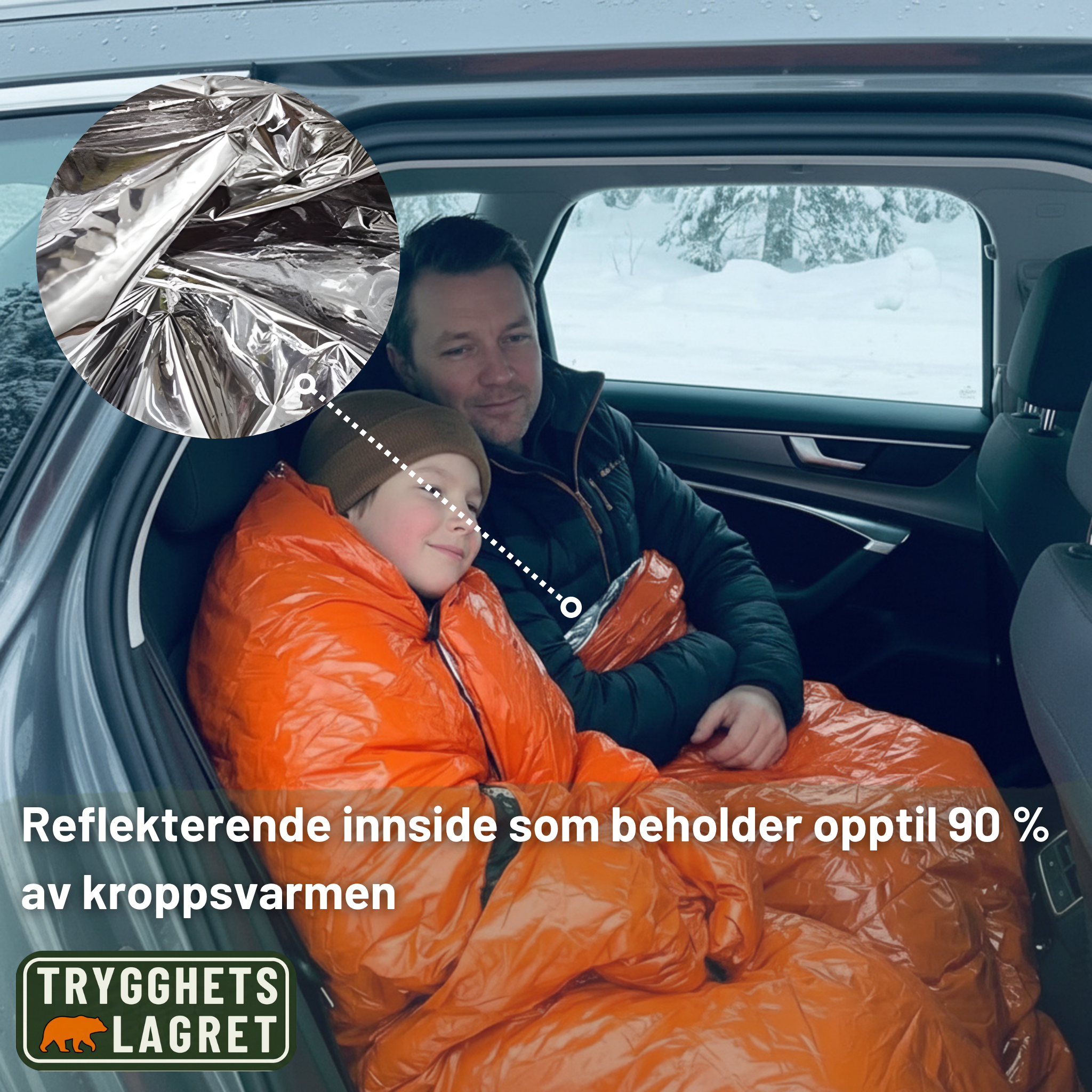
- Warmth — when the cold turns dangerous
- Light, information and communication
- First aid and health
- Money and important documents
- Mental preparedness
- Preparedness in the car
- Civil-defence sirens and shelters
- Season-by-season preparedness
- Build your own emergency box
The content on this page is based on public recommendations from DSB, Sikkerhverdag.no, the Norwegian Red Cross, the Norwegian Food Safety Authority, Norwegian People's Aid and the Civil Defence. Trygghetslagret sells preparedness equipment — we do not give medical or legal advice.
How to prepare your home
How to get your home ready for power cuts, storms and the unexpected. No panic. No doomsday prophecies. Just concrete steps, based on recommendations from the Norwegian civil-protection authority DSB.
Emergency preparedness for everyone
Our complete 22-page preparedness guide — based on recommendations from DSB, Sikkerhverdag.no, the Red Cross, the Norwegian Food Safety Authority, Norwegian People's Aid and the Civil Defence.
Included automatically with every order over 500 kr. Sent by email as a PDF.
How to get started — 7 simple steps
Preparedness doesn't have to be a big project. Having a little is better than having nothing. Start with one step at a time.
Week 1 — Water
Fill a 10-litre container with tap water. Mark it with the date. Put it in a dark cupboard.
DSB recommends 20 litres per person for one week.
Week 2 — Food
Fill a box with food for 7 days. Tinned food, pasta, rice, nuts, chocolate. Things that don't need refrigeration.
Week 3 — Radio
Get a DAB radio with solar panel and hand crank. Test it. Find your local emergency station.
Norway no longer has FM — DAB+ is essential.
See the emergency radio →
Week 4 — Light
A head torch per family member and a big bag of tealights. Keep torches in fixed places.
Week 5 — Health
Top up the first aid kit. Check that prescription medicines will last at least a month.
Week 6 — Practical
Withdraw cash for one week's shopping. Gather important documents in a waterproof folder.
Week 7 — People
Get to know a neighbour. Talk about preparedness. Look up your nearest shelter.
Three things to know first
1. DAB is not optional in Norway
The FM network was switched off in 2017. Every modern radio in Norway must be a DAB radio. Check that yours supports DAB+, not just DAB.
2. 20 litres of water per person
That's DSB's recommendation for one week. For a family of four that's 80 litres. Start with 40 — enough for the most critical three days.
3. Mobile networks fail after a few hours
When the base stations' batteries run out during a power cut, a DAB radio becomes your only link to information. NRK P1 is Norway's official emergency channel.
The full preparedness guide — free with orders over 500 kr
22 pages of concrete advice, checklists and source references. Written for Nordic conditions. Includes:
- Water — your most important resource
- Food — your emergency store in the cupboard
- Warmth — when the cold turns dangerous
- Light, information and communication
- First aid and health
- Money and important documents
- Mental preparedness
- Preparedness in the car
- Civil-defence sirens and shelters
- Season-by-season preparedness
- Build your own emergency box
The content on this page is based on public recommendations from DSB, Sikkerhverdag.no, the Norwegian Red Cross, the Norwegian Food Safety Authority, Norwegian People's Aid and the Civil Defence. Trygghetslagret sells preparedness equipment — we do not give medical or legal advice.
All Products