How to prepare your home
How to get your home ready for power cuts, water outages, storms and the unexpected. No panic. No doomsday predictions. Just concrete steps, based on UK Government guidance from the Prepare campaign.

Emergency preparedness for everyone
Be Ready — our complete 45-page preparedness guide, written for UK households. Based on guidance from the UK Government's Prepare campaign, the NHS, the Met Office, the Environment Agency, Ofgem, Water UK and the British Red Cross.
Included free with every order. You'll get the download link (PDF) in your order confirmation email.
How to get started — 7 simple steps
Preparedness doesn't have to be a big project. Having a little is better than having nothing. Start with one step at a time.
Week 1 — Water
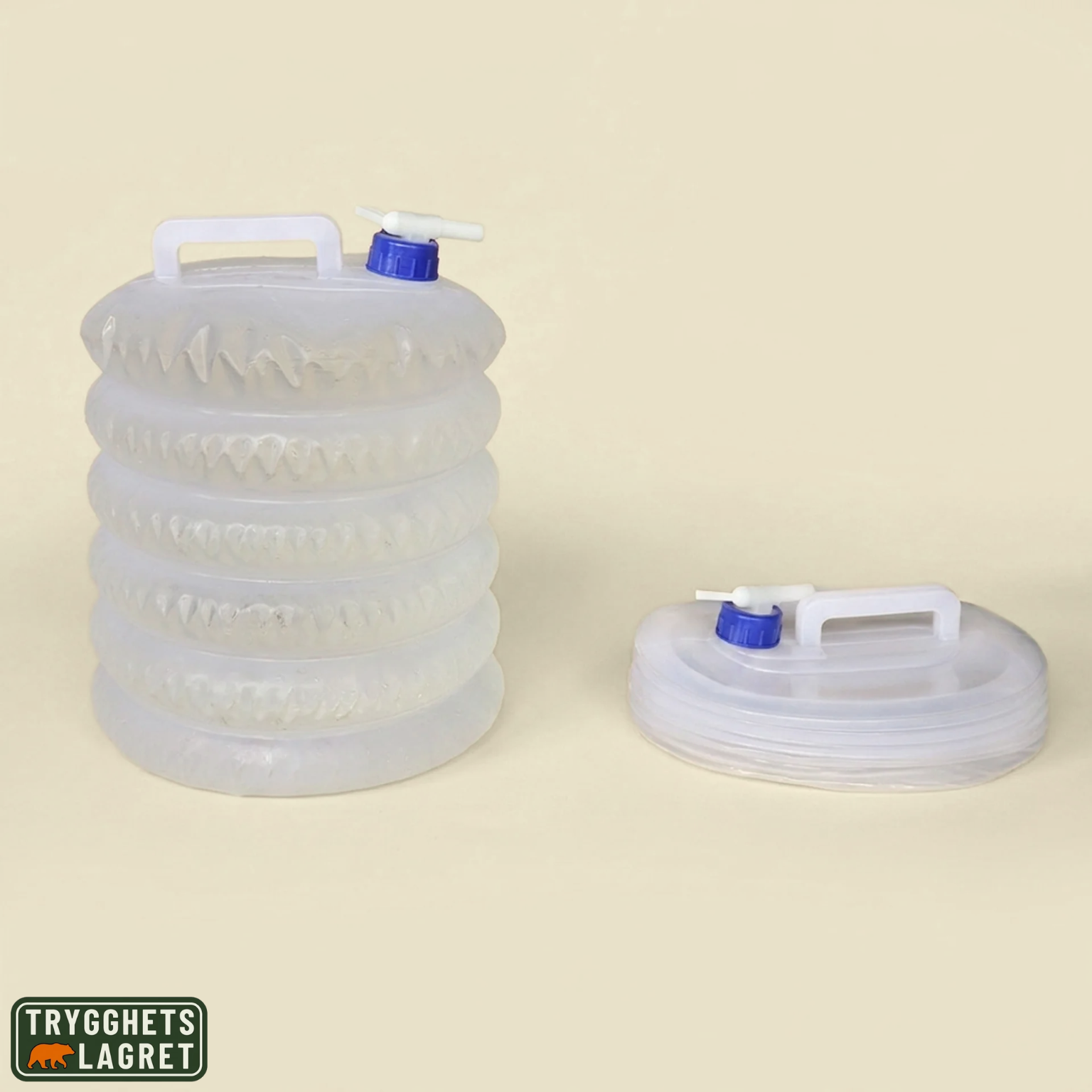
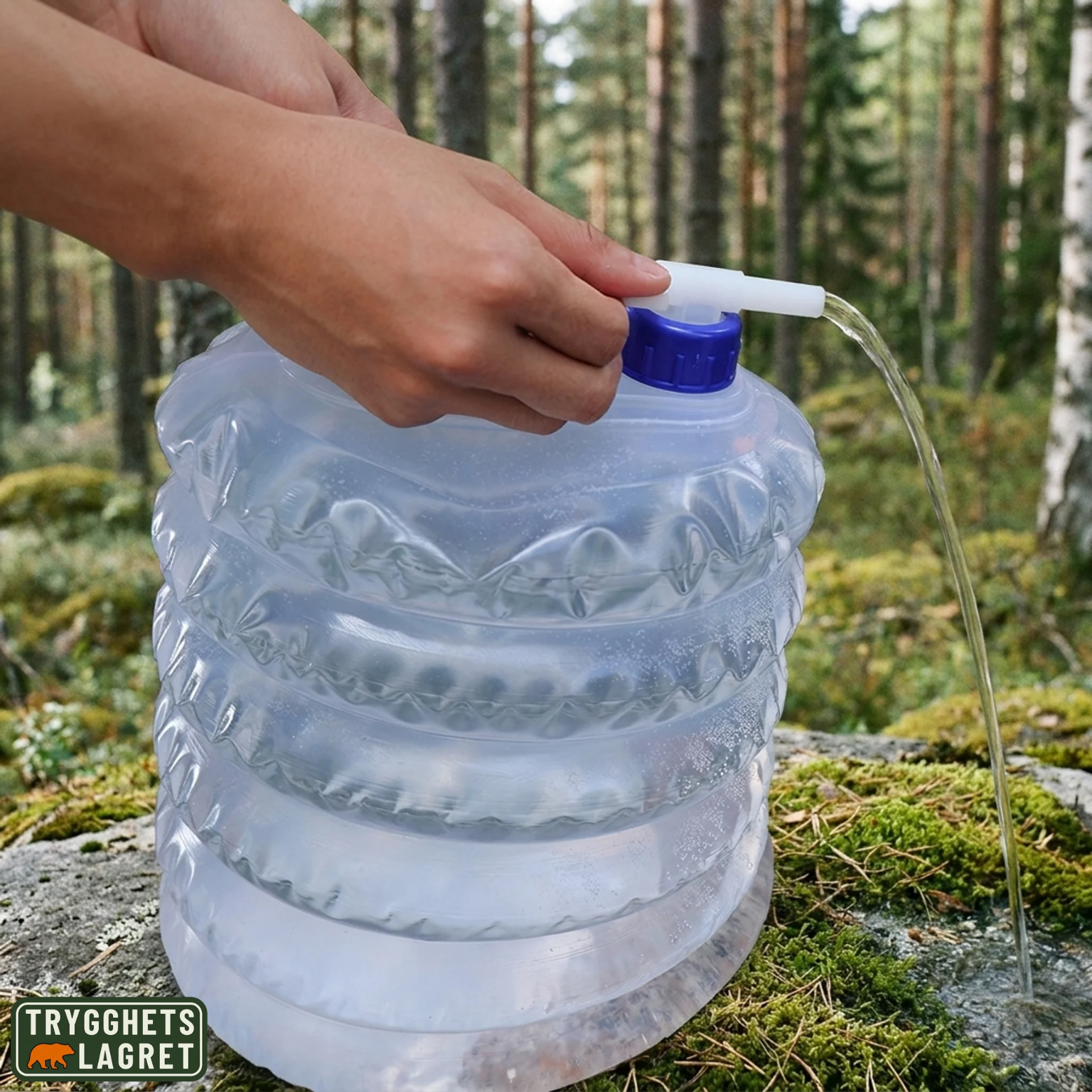
Buy bottled water and put it somewhere cool and dark. Start with two days' worth per person. Write the date on the box.
UK Government guidance: at least 2.5–3 litres of drinking water per person per day.
Week 2 — Food
Fill one box with food for three days that needs no fridge and little or no cooking: tins, crackers, nuts, long-life milk. Don't forget a manual tin opener.
Week 3 — Radio
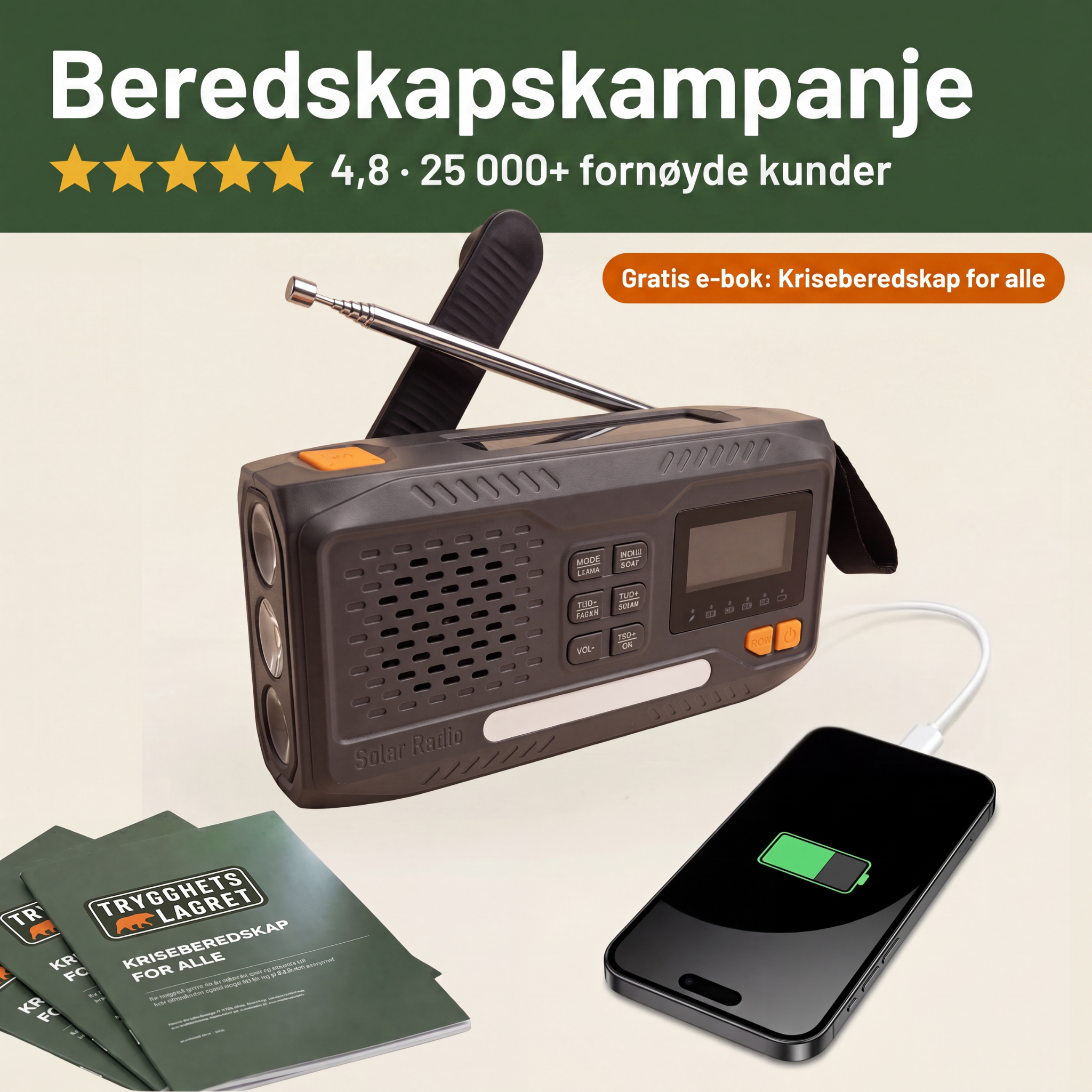
Get a battery or wind-up radio with both DAB and FM. Test it. Find your BBC local radio frequency and write it on the back.
See the emergency radio →
Week 4 — Light
A torch for every person — ideally a head torch so your hands stay free — plus spare batteries. Keep one where you can reach it in the dark.
Week 5 — Health
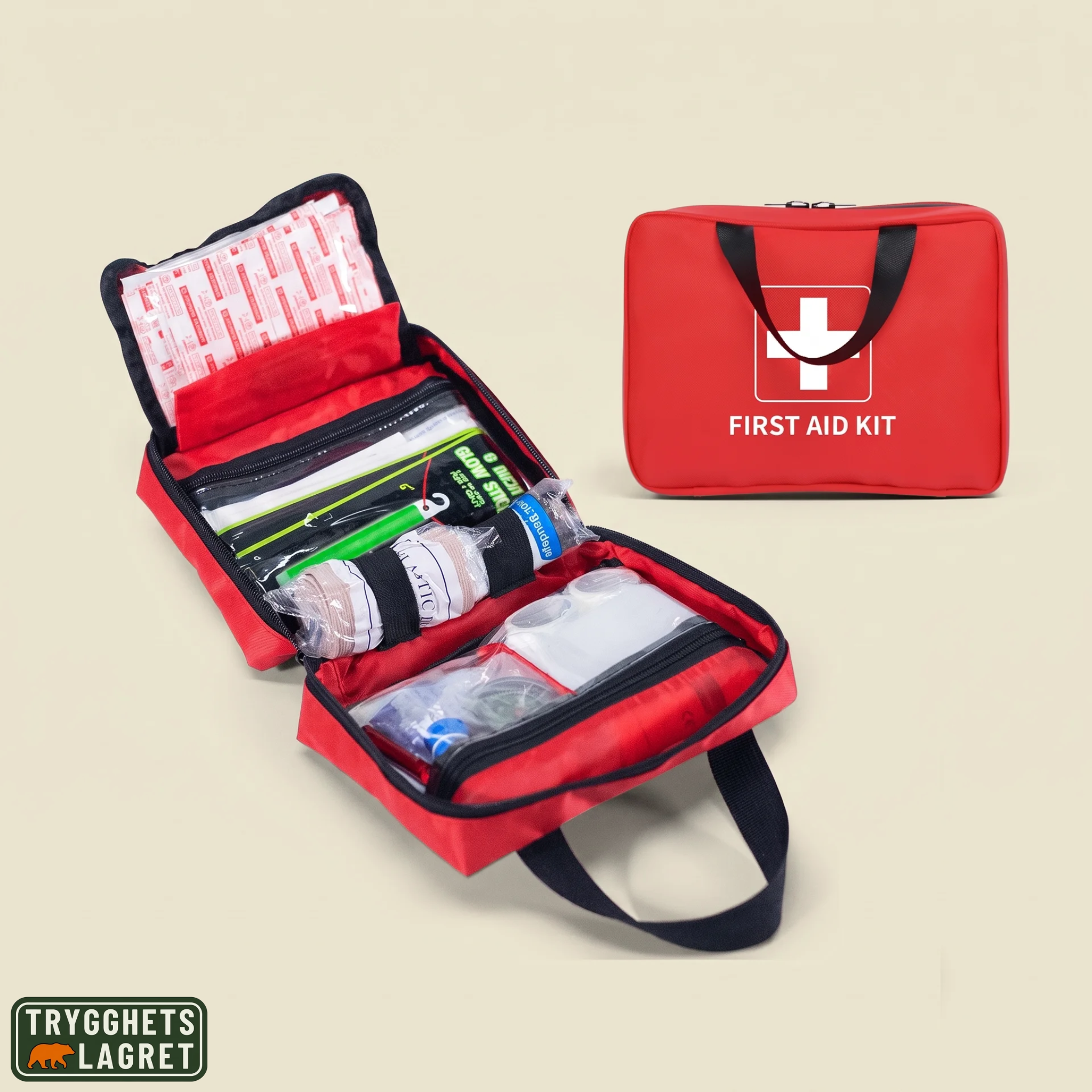
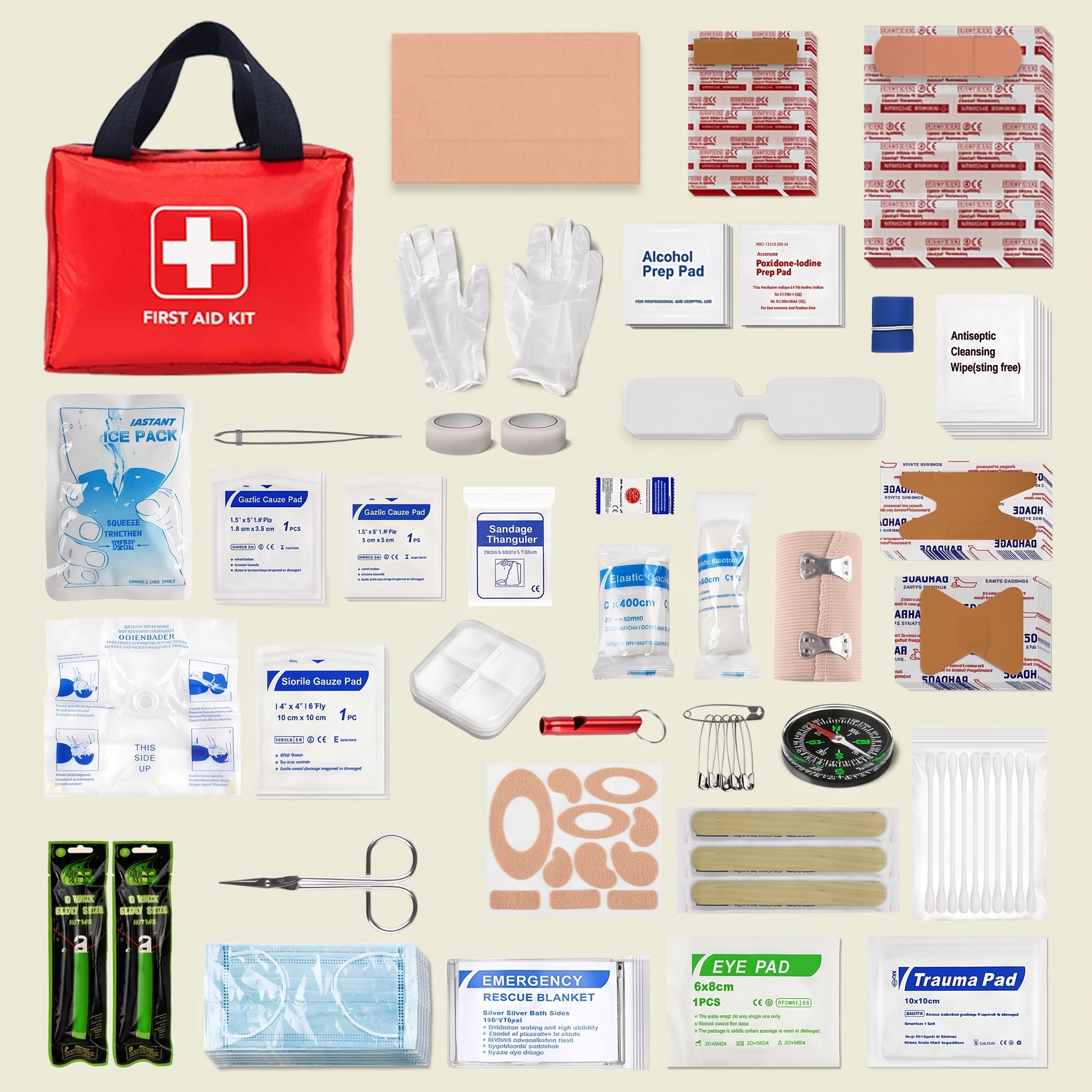
Top up the first aid kit. Check your prescription medicines and how quickly you could reorder them.
Week 6 — Practical
Write your emergency numbers on paper. Learn where your stopcock, fuse box and gas valve are. Check whether anyone in your household qualifies for the Priority Services Register.
Week 7 — People
Swap phone numbers with a neighbour. Agree a meeting point with your household. Ask an elderly neighbour whether anyone would check on them.
Three things to know first
1. A battery or wind-up radio is on the official list
The UK Government's Prepare guidance lists a battery or wind-up radio for getting updates during a power cut. In the UK both FM and DAB still work — BBC local radio is where local updates are broadcast.
2. Plan for at least 3 litres of water per person per day
Guidance quoted by the UK Government is 2.5–3 litres of drinking water per person per day, and around 10 litres if you also want to cook and wash. For a household of four, three days of drinking water is 36 litres.
3. Your phone and landline may not work in a power cut
Digital landlines stop working when the power goes unless they have battery backup, and mobile masts can go down in long outages. A radio that doesn't depend on mains power or the internet keeps you informed. Report a power cut on 105.
The full guide — free with every order
45 pages of practical advice, checklists and source references, written for UK households and made for your phone. Includes:
- Water — your most important resource
- Food — the cupboard that works without power
- Warmth — when cold turns dangerous
- Light, information and communication
- First aid and health at home
- Money and important documents
- Fire — the emergency most likely to happen to you
- Mental preparedness
- Emergency Alerts and official warnings
- Preparedness in the car
- Season by season — and how to build your box
The content on this page is based on public guidance from the UK Government's Prepare campaign, the NHS, the Met Office, the Environment Agency, Ofgem, Water UK and the British Red Cross. Trygghetslagret sells preparedness equipment — we do not give medical or legal advice.
How to prepare your home
How to get your home ready for power cuts, water outages, storms and the unexpected. No panic. No doomsday predictions. Just concrete steps, based on UK Government guidance from the Prepare campaign.
Emergency preparedness for everyone
Be Ready — our complete 45-page preparedness guide, written for UK households. Based on guidance from the UK Government's Prepare campaign, the NHS, the Met Office, the Environment Agency, Ofgem, Water UK and the British Red Cross.
Included free with every order. You'll get the download link (PDF) in your order confirmation email.
How to get started — 7 simple steps
Preparedness doesn't have to be a big project. Having a little is better than having nothing. Start with one step at a time.
Week 1 — Water
Buy bottled water and put it somewhere cool and dark. Start with two days' worth per person. Write the date on the box.
UK Government guidance: at least 2.5–3 litres of drinking water per person per day.
Week 2 — Food
Fill one box with food for three days that needs no fridge and little or no cooking: tins, crackers, nuts, long-life milk. Don't forget a manual tin opener.
Week 3 — Radio
Get a battery or wind-up radio with both DAB and FM. Test it. Find your BBC local radio frequency and write it on the back.
See the emergency radio →
Week 4 — Light
A torch for every person — ideally a head torch so your hands stay free — plus spare batteries. Keep one where you can reach it in the dark.
Week 5 — Health
Top up the first aid kit. Check your prescription medicines and how quickly you could reorder them.
Week 6 — Practical
Write your emergency numbers on paper. Learn where your stopcock, fuse box and gas valve are. Check whether anyone in your household qualifies for the Priority Services Register.
Week 7 — People
Swap phone numbers with a neighbour. Agree a meeting point with your household. Ask an elderly neighbour whether anyone would check on them.
Three things to know first
1. A battery or wind-up radio is on the official list
The UK Government's Prepare guidance lists a battery or wind-up radio for getting updates during a power cut. In the UK both FM and DAB still work — BBC local radio is where local updates are broadcast.
2. Plan for at least 3 litres of water per person per day
Guidance quoted by the UK Government is 2.5–3 litres of drinking water per person per day, and around 10 litres if you also want to cook and wash. For a household of four, three days of drinking water is 36 litres.
3. Your phone and landline may not work in a power cut
Digital landlines stop working when the power goes unless they have battery backup, and mobile masts can go down in long outages. A radio that doesn't depend on mains power or the internet keeps you informed. Report a power cut on 105.
The full guide — free with every order
45 pages of practical advice, checklists and source references, written for UK households and made for your phone. Includes:
- Water — your most important resource
- Food — the cupboard that works without power
- Warmth — when cold turns dangerous
- Light, information and communication
- First aid and health at home
- Money and important documents
- Fire — the emergency most likely to happen to you
- Mental preparedness
- Emergency Alerts and official warnings
- Preparedness in the car
- Season by season — and how to build your box
The content on this page is based on public guidance from the UK Government's Prepare campaign, the NHS, the Met Office, the Environment Agency, Ofgem, Water UK and the British Red Cross. Trygghetslagret sells preparedness equipment — we do not give medical or legal advice.
All Products